Finish is what a product does to light. A matte finish scatters light, so hair looks natural, textured, and product-free; a shine finish reflects it, so hair looks polished, sleek, and slightly wet. The right one depends on your hair type, your style, and how oily your scalp gets — get it wrong and even a good product looks off.
Key Takeaways
- Finish is about light: matte scatters it, shine reflects it. Hold is a separate dial.
- Matte makes texture and volume look bigger, and keeps scalp oil invisible.
- Shine makes sleekness and structure look sharper — the finish classic styles are built on.
- Fine, thin, flat, or oily hair belongs in matte. Thick, coarse hair can carry either.
- You can mix: matte base for structure, a touch of shine on the front for dimension.

What "Finish" Actually Means: The Shine Scale
Every styling product lands somewhere on one scale:
- Matte: no visible shine. Hair looks dry and product-free.
- Natural / low shine: a hint of life, like clean hair with nothing in it.
- Satin: a soft sheen — polished, but not wet.
- High shine / wet look: strong reflection. Hair looks deliberately damp and dressed.
Finish and hold are independent settings — a product can hold firmly and finish matte, or hold softly and shine hard. Two products with the same hold can make the same haircut look completely different. Which product family does which job: Hair Powder vs Clay.
The Case for Matte
Matte is the texture finish. Because it scatters light, the eye sees separation between strands — hair reads piecey, defined, and thicker than a shiny style of the same cut. Volume reads bigger too: reflection flattens a silhouette into one smooth surface; matte keeps it dimensional.
Matte is also the forgiving finish. Your scalp adds shine all day as oil builds, so a style that starts at zero shine still reads clean at hour eight. Start shiny, and product shine plus your own oil can read as grease by midday — the full breakdown is in Why Does My Hair Look Greasy by Midday?
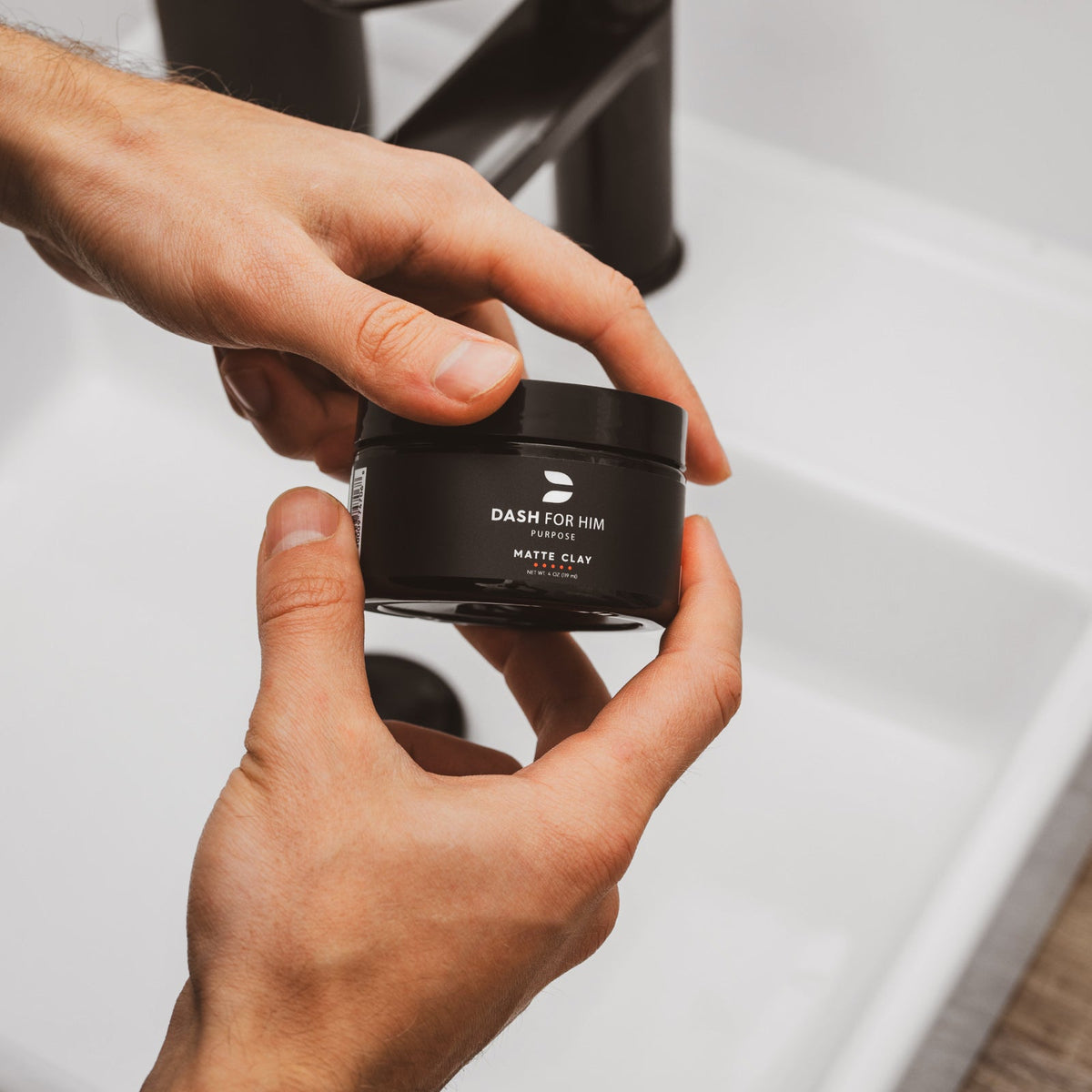
In the DASH FOR HIM lineup, matte is home turf: the Hair Clay finishes true matte on bentonite and kaolin, and the Hair Styling Powder dries down matte at the roots. And with powder, always start with very little — too much at the start causes trouble.
The Case for Shine
Shine is the structure finish. Classic styles — side parts, slick backs, pompadours — are built on reflection: the part line reads crisp, the comb's path stays visible, the shape looks deliberate. A matte slick back can look dusty and unfinished — the style needs light to show its lines.
Shine also smooths: it emphasizes sleek surfaces, so individual strands visually merge into one clean mass. Thicker, coarser, darker hair carries it best — enough density that reflection reads as polish instead of exposure.
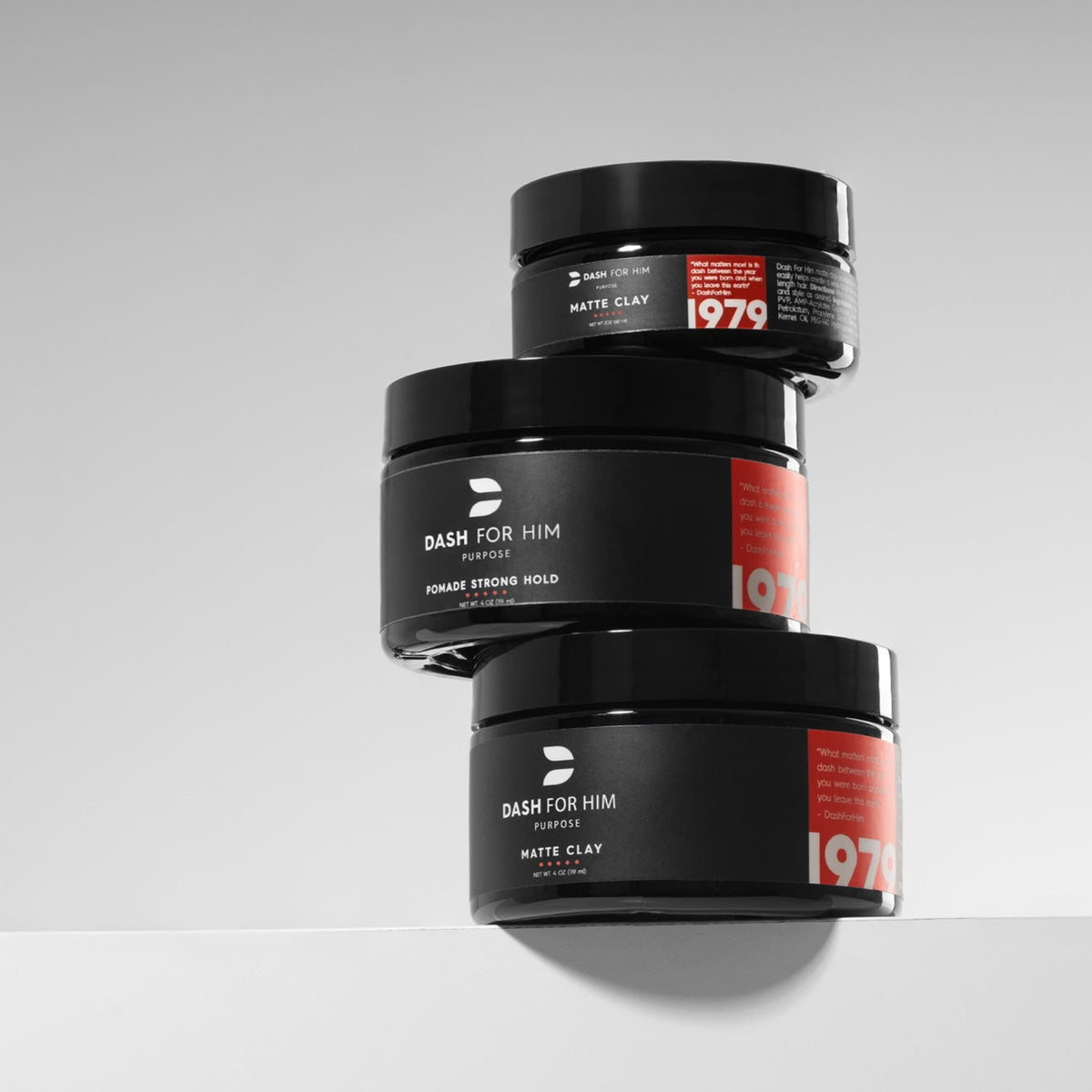
The shine-leaning product in this lineup is pomade — the classic-style tool, $24. DASH FOR HIM's pomade carries a violet tint that adds subtle toning to the hair; it is a styling product with a toning touch, not a purple shampoo. How it stacks up against clay: Hair Clay vs Pomade. The application walkthrough: How to Use Pomade.

Matte or Shine? The Verdict by Hair Type
- Fine or thin hair: matte. Shine clumps fine strands together and lets the scalp show through — hair looks thinner and goes greasy-looking faster. Matte keeps strands separated, so the same hair reads fuller and cleaner.
- Thick or coarse hair: either. Density is your budget — spend it on matte texture for modern, broken-up styles, or on shine for classic sleek ones. Coarse hair scatters light on its own, so a shine product often makes it look groomed rather than rough.
- Curly hair: matte, usually. Matte keeps curls reading as separate, defined groups instead of one mass. Shine on curls is a deliberate wet-look choice, not a default. Details: Hair Clay for Curly Hair.
- Oily scalp, any hair type: matte. Your scalp supplies shine for free by noon. Do not pay for more of it in a jar.
The Verdict by Occasion
- Daily wear, office, casual: matte to natural. It reads as good hair, not visible product — the finish nobody notices, which is the point.
- Formal events, weddings, photos: low shine to shine. A part or slicked style with some reflection reads intentional and dressed, and photographs cleaner than matte.
- Gym days and second-day hair: matte. Oil and sweat add shine anyway; a matte powder reset at the roots pulls the look back to clean.
The Barber's Trick: Matte Base, Shine Detail
You do not have to pick one finish for your whole head. Style the full shape with your matte product first — that sets texture and structure. Then work a fingertip of a shine product only into the front section or along the part line. The base keeps the style natural and full; the detail adds a highlight where the eye lands first.
Two rules keep it clean: shine goes on last, in less than you think — a detail, not a second full application. Keep it off the roots and scalp, where it turns into the greasy look by midday.
3 Finish Mistakes
- Shine on an oily scalp. Product shine plus sebum is the greasy look, hours early. Oily scalps start matte.
- Matte on a slick style. Slick backs and tight parts need reflection to read as intentional. Matte versions look dry, dusty, and half-finished.
- Judging finish in bathroom light only. Warm, dim bathroom light hides shine and flatters everything. Check your finish in daylight or office light before deciding a product works.
Frequently Asked Questions
What is the difference between matte and shine hair products?
Matte products leave little to no visible shine, so hair looks dry, natural, and textured. Shine products reflect light, so hair looks polished, sleek, and slightly wet. Hold is a separate setting — choose finish by the look you want, and hold by the style you wear.
Is matte or shine better for thin hair?
Matte. Shine clumps fine strands together, lets the scalp show through, and makes hair look thinner and greasier as the day goes on. Matte keeps strands separated, so fine or thin hair reads fuller and cleaner. A matte clay for structure, with matte powder at the roots for lift, is the standard thin-hair routine.
Does matte mean a product has no hold?
No — finish and hold are independent. Hair clay finishes matte and still gives flexible, reworkable hold that keeps a style's shape for hours. When you shop, read both labels: pick the finish for how you want the hair to look, then pick the hold level your style needs.
Can you mix matte and shine products?
Yes — it is a standard barber move. Build the whole style with a matte product first for texture and structure, then add a fingertip of a shine product only to the front or the part line for dimension. Keep the shine off the roots, and use less than you think: it is a detail, not a second full application.
Why does my hair look greasy when I use shine products?
Because shine and oil do the same thing to light. Shine product reflects light off the hair's surface, and so does the sebum your scalp adds all day — together they read as grease, especially on fine hair or an oily scalp. If shine styles keep going greasy on you, switch the base to matte and save shine for details.
Is matte or shine better for curly hair?
Matte, for most curly styles. It keeps curls reading as separate, defined groups, while shine tends to merge curls into one wet-looking mass. Shine on curls works when the wet look is the deliberate goal — a styled, dressed finish — rather than an everyday default.
Build Your Finish
DASH FOR HIM covers both ends of the scale. For matte: the Hair Clay ($25, 4 oz) — bentonite, kaolin, beeswax, lanolin, argan oil, and carnauba wax, made in the USA, featured in GQ, and built to sit with the top clays in the category — plus the Hair Styling Powder ($18, the larger website size) for dry matte roots. For shine: the Pomade ($24), the classic-style finish with a violet tint for subtle toning. Pick the light first — the product follows.


Written by CJ Da Barber
Christian "CJ" Gonzalez is an award-winning barber and educator based in Dallas, Texas, and Lead Educator for the D.F.S. Formula in North America. He has earned multiple BTC One Shot Hair Awards and Barbercon's Barber Come Up of the Year award, and he teaches barbering internationally in English and Spanish. CJ is also the barber behind DASH FOR HIM's formulas — he helped develop the hair clay and led R&D on the styling powder as part of the 2019 launch team. Follow him on Instagram: @cjdabarber_