Yes — clay is one of the best styling choices for curly hair. Bentonite and kaolin grip the strands inside each curl, so curls stay grouped and defined under a matte finish instead of puffing into frizz — no crunchy gel shell, no wet shine. Curls take less product than straight hair, and clay should never be raked through them dry.
Key Takeaways
- Clay defines curls without crunch — mineral grip, matte finish, no wet look.
- Use less than straight-hair routines — half a pea to a full pea, in thin layers. Curls weigh down fast.
- Never rake dry curls. Glaze the surface, then pinch and twist sections into clumps.
- Fully dry hair gives the strongest grip; barely damp softens hold for looser waves.
- Clay calms frizz by keeping strands grouped — it changes neither texture nor humidity.

Why Clay Works on Curly Hair
A curl is a bundle of strands spiraling together. Bundles that hold read as defined curls; separated strands read as puff and frizz.
Gel fixes that by force: it locks the bundle and dries hard around it, but the finish is stiff, shiny, and wet-looking — and breaking the cast usually breaks the curls up again. Clay works by grip instead: minerals coat each strand, so strands cling to their neighbors without being cemented. Bundles stay together, spring stays alive, and the style stays reworkable for hours. One honest limit: clay styles the texture you were born with — it does not loosen, straighten, or repair it.
Wavy, Curly, or Coily: The Dose Changes
Wavy hair bends in a loose S and loses shape easily: half a pea, worked in lightly. Curly hair spirals and holds a pattern: half a pea to a full pea, by length and density. Tight coils pack dense pattern into short length: a full pea in thin layers, section by section. New to clay itself? Start with the pillar guide: Hair Clay for Men: The Complete Guide.
The Right Amount: Curls Need Less Than You Think
Straight hair hides product; curls display it — every extra bit is weight hanging on a spiral, and weight stretches spirals out. So curly routines start small: half a pea for short or wavy hair, a full pea for longer or denser curls, always emulsified completely and built in thin layers. Style it, wait a minute, then judge. A section that still will not group earns a micro-layer of its own. A section that got too much goes stringy and flat, and only a wash fixes it — so earn your way up.

How to Apply Hair Clay to Curly Hair: 6 Steps
The general technique is in How to Use Hair Clay. This is the curly version:
- Start dry, or barely damp at most. Dry hair gives clay its full grip. Just short of dry softens hold slightly — looser waves sometimes prefer it. Soaking wet dilutes clay, and curls dry wherever they please.
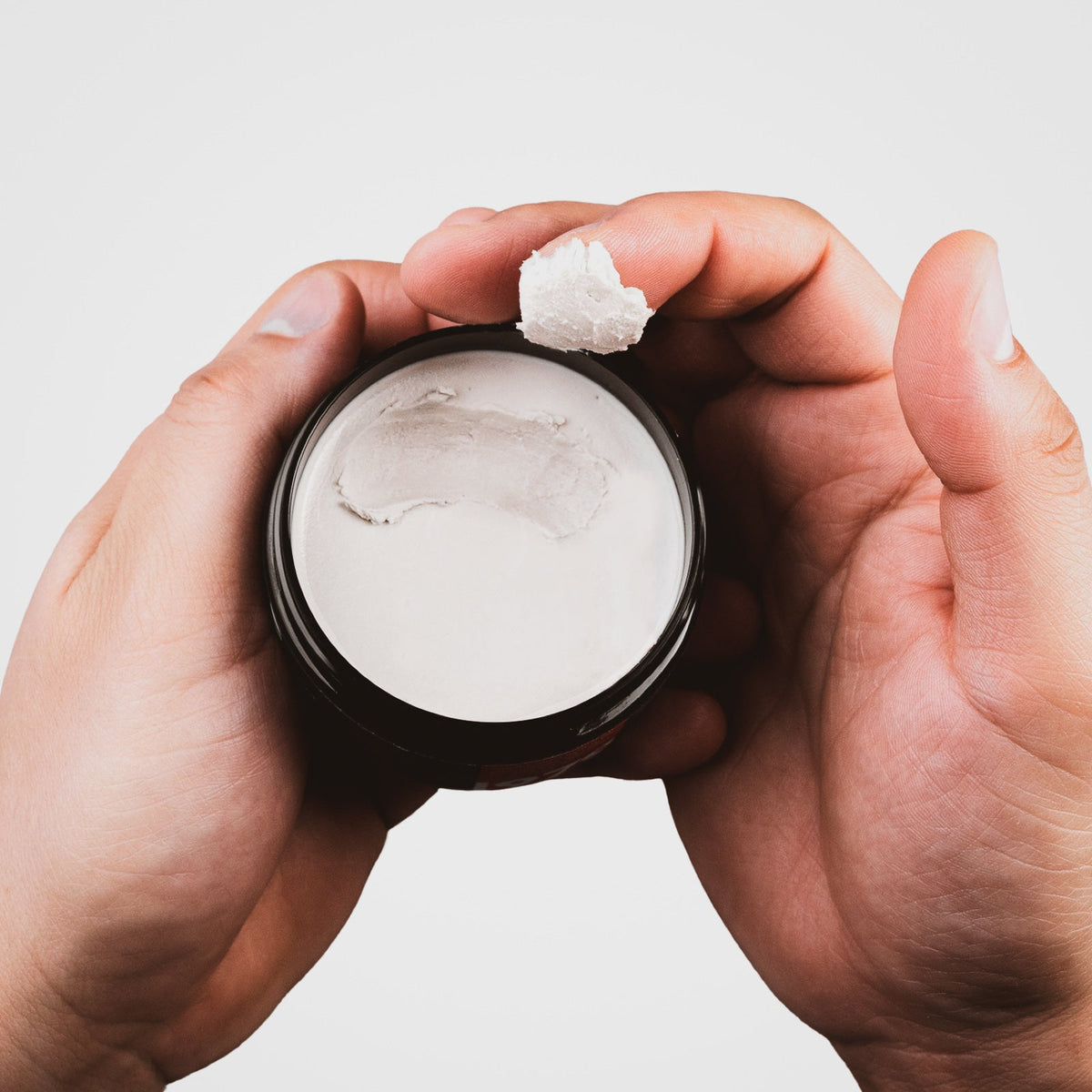
- Emulsify until it vanishes. Rub 10 to 20 seconds across palms and fingers until no white remains — unmelted clay shows as white patches on curls.
- Glaze the surface first. Pass coated palms lightly over the whole head without digging in — thin, even film, curl pattern untouched.
- Pinch and twist small sections. Pinch one section at a time and twist in the direction it already curls — this groups strands into clean curls.
- Scrunch waves, twist curls. Loose waves form best scrunched upward in a fist, held a second, released. Tighter curls respond to the twist, section by section.
- Hands off while it sets. Give it a few minutes untouched — every pass of your hands pulls bundles apart and manufactures frizz.
Frizz, Honestly — And the Humidity Question
Frizz is mostly escapees — individual strands that left their bundle and catch light on their own, reading as a halo. Clay reduces it mechanically: grip keeps strands with the group, and matte keeps strays from shining.
Humidity is the harder truth. Curly hair drinks moisture from damp air, swells, and pushes its bundles apart — and no styling product makes hair humidity-proof. On the worst days, expect the shape to soften by evening. The fix is dry fingers and a quick re-twist of the puffed sections — not another scoop on top.
The Cut: Curls Should Be Cut Dry
Curls shrink as they dry, so a wet cut is partly a guess — chair length is not real-world length. A barber who knows curls cuts dry, or finishes dry, so the shape you see is the shape you get. Weight matters too: heavy ends drag curls into a triangle, wide at the bottom and flat on top. Ask for weight managed through the ends and layering that lets the top keep its spring, and describe your real routine — it decides how much structure the cut must do alone.
Day Two: Refresh, Don't Restart
Curls often look better on day two, once the fresh-wash puff is gone. Refresh with dry fingertips — re-twist sections that lost their grouping, using the clay already in. Oily, flat roots get a little styling powder — and the rule is the same as always: start with very little powder, because too much up front causes trouble.
Styles That Suit Curly Hair
- Natural curls worn forward: the pattern does the talking — clay keeps each curl grouped.
- Textured fringe: curls forward over the forehead — forgiving, and it hides a stubborn hairline.
- Longer curls on top, tight sides: the contrast keeps big curl patterns looking deliberate, not overgrown.
- Curly quiff: front sections twisted up and back for height; matte keeps it modern, not retro-glossy.
5 Mistakes That Ruin a Curly Style
- Raking fingers through dry curls. That is literally how frizz is made. Glaze and twist instead.
- Using straight-hair amounts. Surplus clay is pure weight — stretched, stringy spirals by noon.
- Applying to soaking-wet hair. Diluted clay, weak grip, curls drying in directions nobody chose.
- Skipping the full emulsify. Half-melted clay grabs in patches: white spots here, bare sections there.
- Touching it all day. Every adjustment separates bundles further. Style it, let it set, leave it.
Frequently Asked Questions
Is hair clay good for curly hair?
Yes. Bentonite and kaolin grip the strands inside each curl, so curls stay grouped and defined with a matte finish — no gel crunch, no wet shine. Start small: half a pea for short or wavy hair, up to a full pea for longer, denser curls.
How much hair clay should I use for curly hair?
Start with half a pea-sized amount for short or wavy hair, or a full pea for longer, denser curls — fully emulsified, in thin layers. Curls weigh down fast: too much stretches the spiral and turns it stringy. Add a micro-layer only where a section refuses to group.
Should I put clay in wet or dry curly hair?
Dry hair for full grip — clay's strongest setting. Barely damp softens the hold, which suits loose waves. Soaking wet hair dilutes the clay and lets curls dry in whatever direction they choose.
Will hair clay make my curls frizzy?
Not if you apply it right. Frizz comes from separating the curl bundles — raking fingers through dry curls does exactly that. Glaze first, then pinch and twist sections in the direction they already curl — the bundles stay together instead of breaking into frizz.
Is clay or gel better for curly hair?
For a natural finish, clay. Gel defines by drying into a hard, shiny cast — the crunch most men are avoiding. Clay defines by grip: bundles hold together, the finish stays matte, and the hold stays flexible enough to reshape. Gel still wins for a deliberately wet, slicked look.
Does hair clay stop frizz in humidity?
It reduces the frizzy look — honestly, only partly. Grip keeps strands grouped, so fewer escape into the halo. But curls absorb moisture from humid air and swell, and no product makes hair humidity-proof. On the worst days, expect softness by evening; re-twist the puffed sections with dry fingers.
The Right Clay for Curly Hair
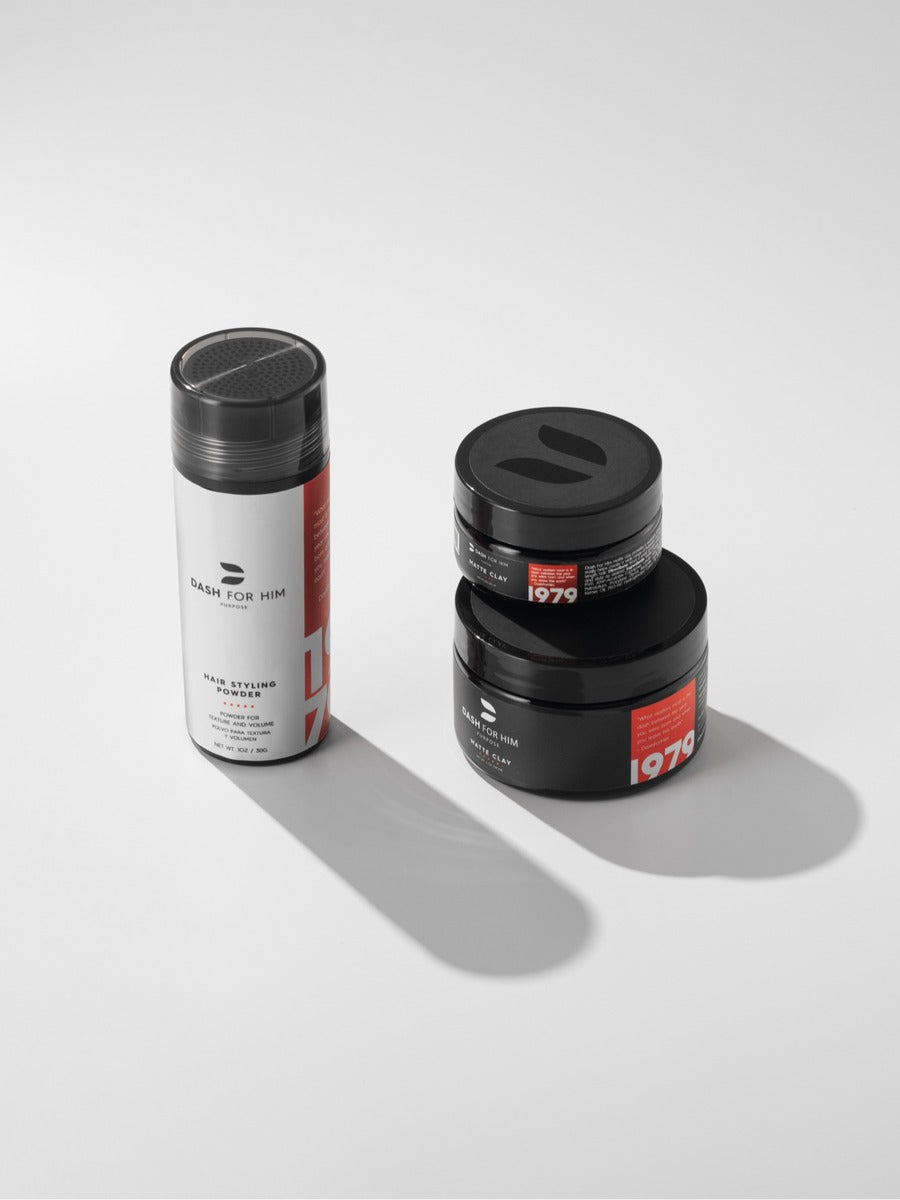
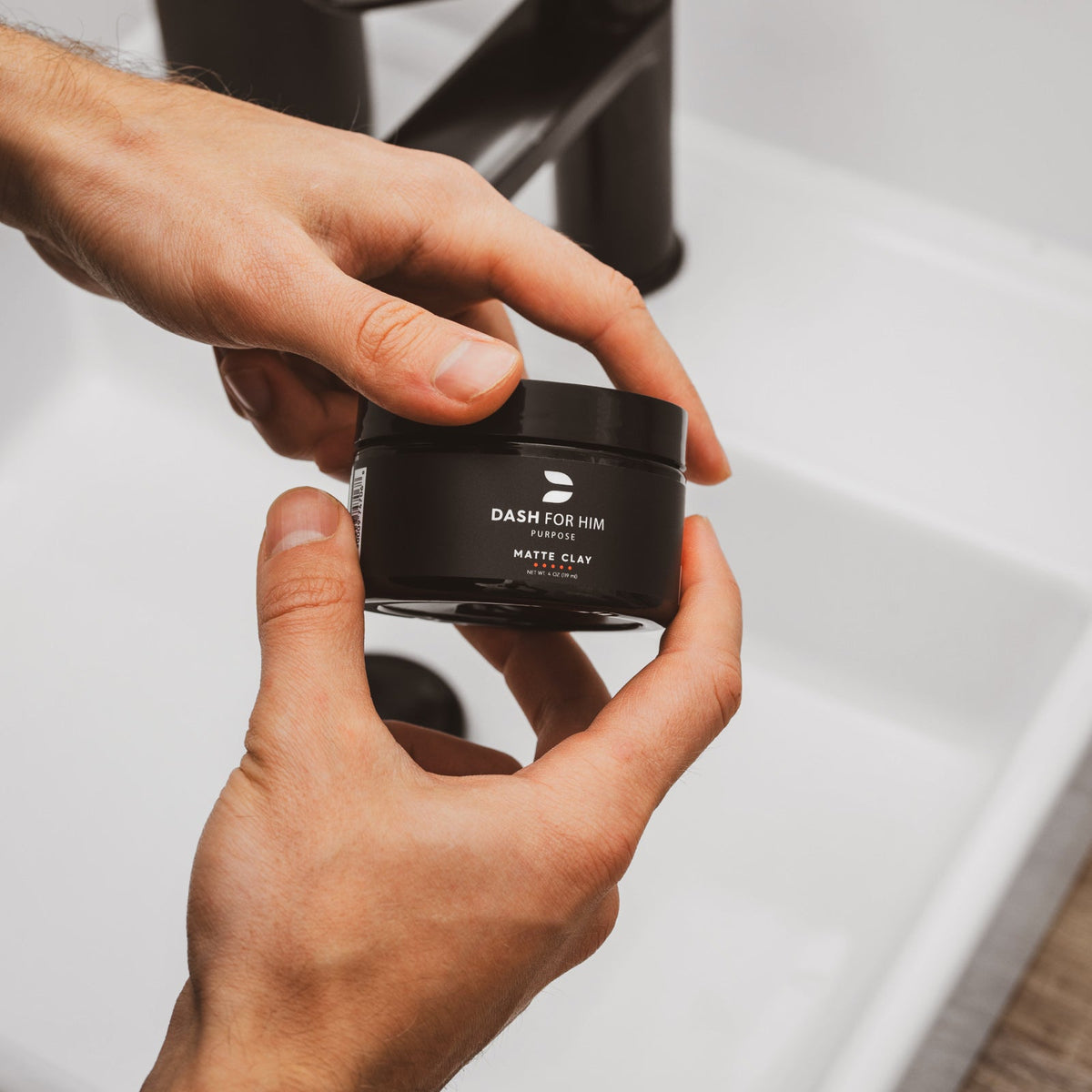
DASH FOR HIM's formula works as a hair clay for curly hair because it is built on bentonite and kaolin — the minerals behind the grip and matte finish — with beeswax, lanolin, argan oil, and carnauba wax keeping it workable instead of stiff. Made in the USA, featured in GQ, and built to sit with the top clays in the category. The 4 oz jar is $25. Dense, heavy curls? See Hair Clay for Thick Hair. Fine, flat-prone curls? Hair Clay for Thin Hair is the light-dose version.
Shop now: Hair Clay


Written by CJ Da Barber
Christian "CJ" Gonzalez is an award-winning barber and educator based in Dallas, Texas, and Lead Educator for the D.F.S. Formula in North America. He has earned multiple BTC One Shot Hair Awards and Barbercon's Barber Come Up of the Year award, and he teaches barbering internationally in English and Spanish. CJ is also the barber behind DASH FOR HIM's formulas — he helped develop the hair clay and led R&D on the styling powder as part of the 2019 launch team. Follow him on Instagram: @cjdabarber_