Yes — clay is one of the best styling choices for thick hair. Bentonite and kaolin grip dense hair strand by strand and lay it down in a matte finish, so the bulk sits where you put it instead of puffing back out — no hard gel shell, no wet shine. Thick hair plays by different rules: it needs more clay, applied through every section, not just the surface.
Key Takeaways
- Clay controls thick hair: mineral grip plus a matte finish tame bulk without gel stiffness or shine.
- Start with a full pea-sized amount — thick hair needs more than the standard dose, in thin layers.
- Coverage is everything. Work clay through in sections, or the untreated hair underneath pushes back out.
- Style with your growth direction, not against it. Thick hair wins that fight by noon.
- Shine makes bulk look bigger. Matte keeps dense hair looking neat and close.

Why Clay Works on Thick Hair
Thick hair's problem is mass. There is simply a lot of it — it grows outward as much as down, puffs up after a wash, and rebuilds itself into a rounded shape within hours. Heavy products sit on it without gripping it. Gel grips it, but sets into a stiff, shiny shell.
Clay splits the difference. The minerals coat each strand with fine grit, so strands hold together and move in the direction you set them instead of springing back. The matte finish works too: shine wraps light around every strand and exaggerates the size of the mass, while matte absorbs it, so the same hair reads tighter. The minerals also absorb excess oil at the roots. One honest limit: clay cannot change how much hair you have or how it grows — it manages what the density does between haircuts. The cut handles the rest.
Thick Hair vs. Coarse Hair: The Quick Difference
Thick hair means density — a lot of strands per square inch. Coarse hair means each individual strand is thick and wiry. Plenty of men have one without the other, and plenty have both. Clay serves all three cases: grip to direct the hair, matte to keep the mass from advertising itself. What clay is, and how it compares to pomade and wax: Hair Clay for Men: The Complete Guide.
The Right Amount: Thick Hair Needs More
Standard advice says a pea-sized amount, full stop. For thick hair, a full pea is the floor, not the ceiling. Use less and the top layer looks styled at 9 a.m. while the untreated hair underneath pushes everything back out by noon. Start with a full pea, emulsify it completely, work it through, then check the shape. Any section still springing back gets a second thin layer of its own. Coverage beats quantity — two thin layers hold cleaner than one heavy scoop.

How to Apply Hair Clay to Thick Hair: 6 Steps
The general technique is in How to Use Hair Clay. This is the thick-hair version:
- Start with dry hair. Genuinely dry. Dense hair hides moisture deep in the mass, and a damp core dilutes the clay where grip matters most.
- Warm a full pea until it disappears. Rub 10 to 20 seconds across palms and fingers until no white remains. Half-warmed clay never gets past the surface.
- Work in sections. Top, crown, sides, back — fingers through to the scalp in every zone. Skipping the underlayer is the mistake thick hair punishes fastest.
- Build at the roots and mid-lengths. That is where the bulk lives and direction is set. The ends need only what is left on your fingers.
- Press the shape in, then define. Flat palms first, to press the mass into place. Then pinch and twist the top into texture.
- Wait a minute, then spot-fix. Wherever hair still springs out, that section was under-covered — add a micro-layer there only.
Work With Your Growth Direction, Not Against It
Every head has a growth pattern — the crown swirl, the cowlick, the side that wants to fall forward. Fine hair can be argued with; thick hair cannot. It has the strength to enforce its pattern, and fighting it with product costs double the clay and still loses by midday. Blow-dry in the direction the hair naturally travels — or the direction of the style, where the two mostly agree — then let clay hold what the dryer set. If your target style genuinely fights your growth pattern, that is a haircut conversation, not a more-product conversation.
The Cut Does Half the Work
Product manages the hair between cuts; the cut decides how much managing is needed. Ask your barber for weight removal on top — point cutting or texturizing takes bulk out of the ends so the mass lies closer. Ask for the sides kept tighter, too: overgrown sides are where the mushroom silhouette starts. And say plainly what your hair does — "it puffs out by noon" is exactly what a good barber builds a cut around.
Day Two: When the Roots Get Oily
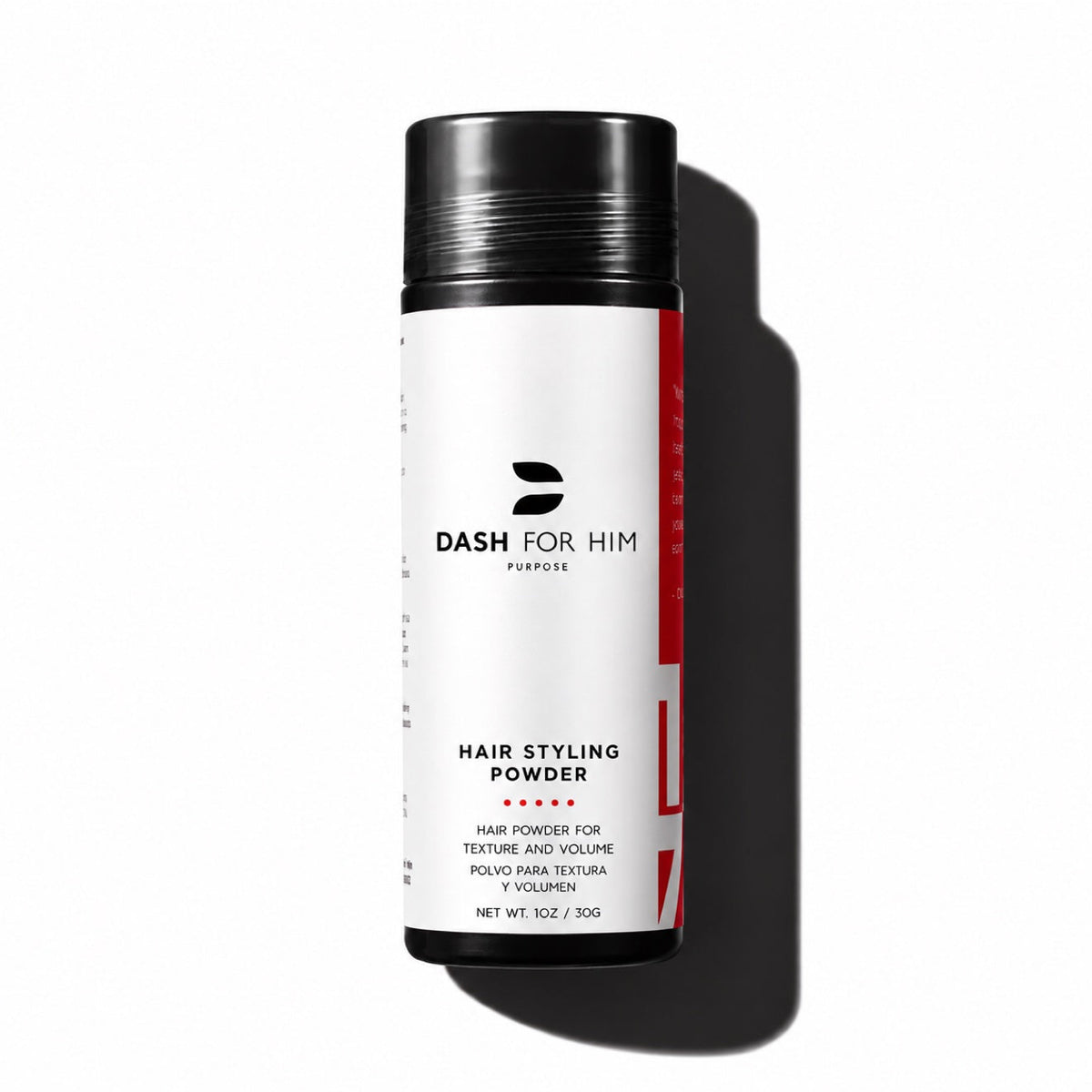
Thick hair often looks fine on top the next day while the roots underneath turn oily and start separating the mass. A small shake of styling powder at the roots absorbs that oil — and the rule is the same as always: start with very little powder, because too much up front causes trouble. Full powder method: How to Use Hair Styling Powder for Men.
Styles That Suit Thick Hair
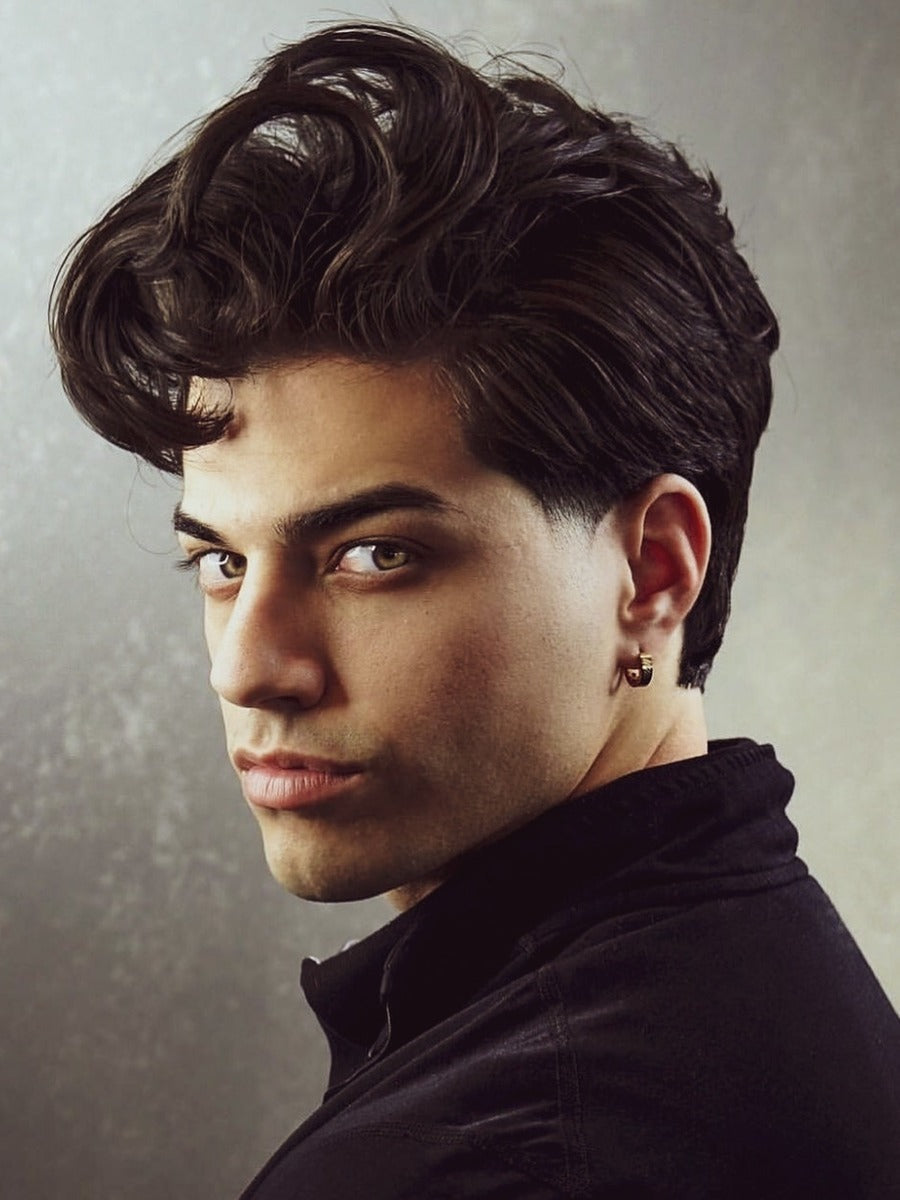
- Textured crop, fringe forward: works with forward growth, and texture breaks the mass into pieces instead of one solid block.
- Short back and sides, length on top: removes bulk where puff starts.
- Side part, matte finish: classic-part control without the glossy helmet effect shine gives dense hair.
- Longer top swept back: works if the sides stay tight and clay is pressed through the top.
5 Mistakes That Make Thick Hair Harder to Control
- Using too little product. The surface gets styled, the underlayer does not, and the puff returns by noon.
- Coating only the surface. Palms smoothed over dense hair never reach the roots and mid-lengths where bulk lives.
- Fighting the growth direction. More clay, more time, same result by lunch.
- Reaching for shine. Wet-look finishes make mass look bigger and read greasy fast as oil builds.
- Blaming the product for the cut. Overgrown sides and untextured ends are a barber problem — clay cannot remove bulk that should have been cut out.
Frequently Asked Questions
Is hair clay good for thick hair?
Yes. Bentonite and kaolin grip dense strands and hold them in the direction you set, while the matte finish keeps the mass from looking bigger than it is. Start with a full pea-sized amount, worked through in sections.
How much hair clay should I use for thick hair?
A full pea-sized amount, fully emulsified, applied section by section. Add a second thin layer only where hair still springs back — coverage matters more than quantity.
Why does my thick hair puff out by midday?
Under-coverage: the top layer got product, the underlayer did not, and untreated hair pushes everything back to its natural shape. Fix it with full section-by-section coverage, plus weight removal at your next cut.
Is clay or gel better for thick hair?
For most thick hair, clay. Gel sets hard and shiny and its wet look makes bulk appear larger; clay gives a matte, flexible hold you can reshape during the day. Gel still suits very short, slicked styles where a wet finish is the point.
Should I put clay in wet or dry hair if my hair is thick?
Dry hair. Thick hair traps moisture deep in the mass, so hair that feels dry on the surface can still be damp at the core — and water dilutes clay's grip. Towel-dry, then finish with a dryer or air time.
Can clay make thick hair look less bulky?
It manages the silhouette: grip lays strands together in one direction, and the matte finish stops light from exaggerating the mass. It does not remove density — that is your haircut's job.
The Right Clay for Thick Hair
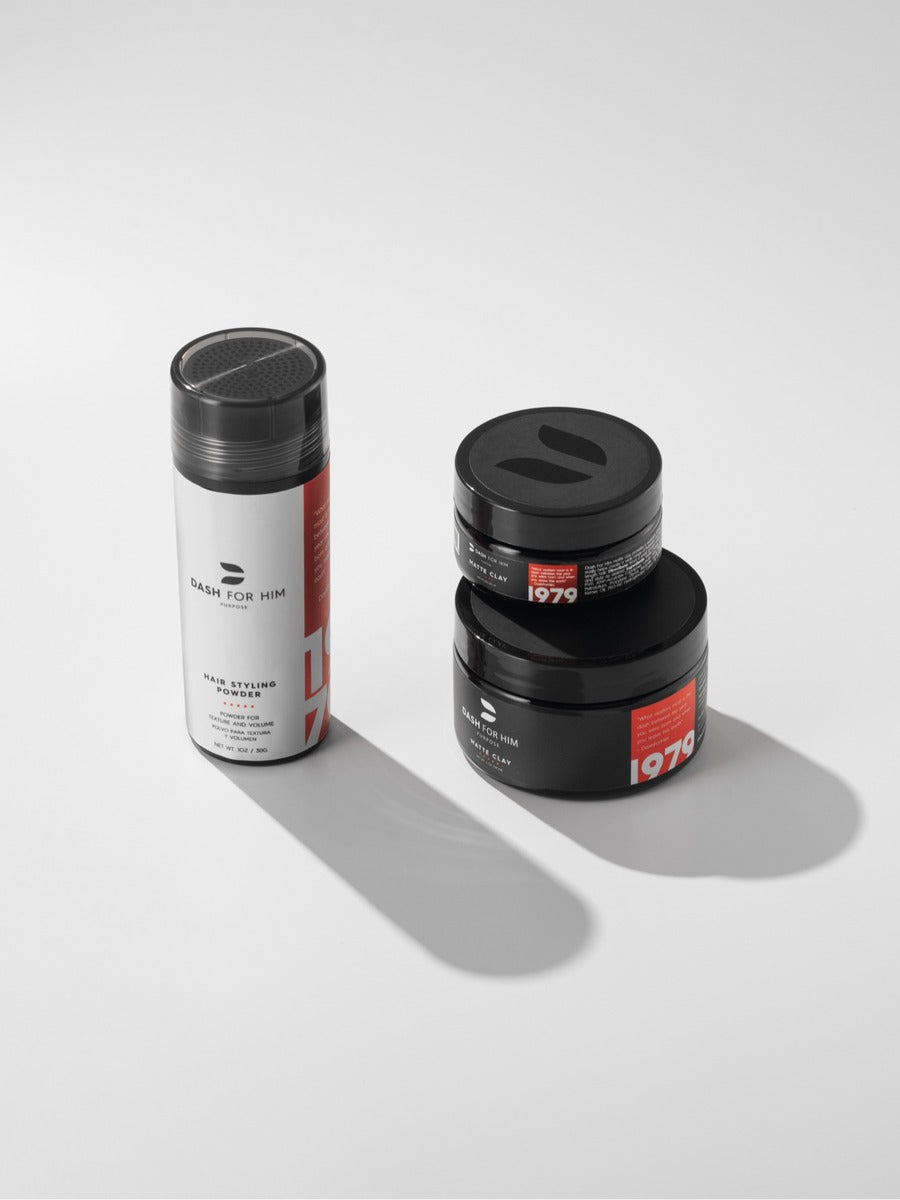
DASH FOR HIM Hair Clay is built on bentonite and kaolin — the minerals behind the grip and matte finish — with beeswax, lanolin, argan oil, and carnauba wax for workability. Made in the USA, featured in GQ, and built to sit with the top clays in the category. The 4 oz jar is $25. Fine or thinning instead? Read the other side of this guide: Hair Clay for Thin Hair.
Shop now: Hair Clay


Written by CJ Da Barber
Christian "CJ" Gonzalez is an award-winning barber and educator based in Dallas, Texas, and Lead Educator for the D.F.S. Formula in North America. He has earned multiple BTC One Shot Hair Awards and Barbercon's Barber Come Up of the Year award, and he teaches barbering internationally in English and Spanish. CJ is also the barber behind DASH FOR HIM's formulas — he helped develop the hair clay and led R&D on the styling powder as part of the 2019 launch team. Follow him on Instagram: @cjdabarber_