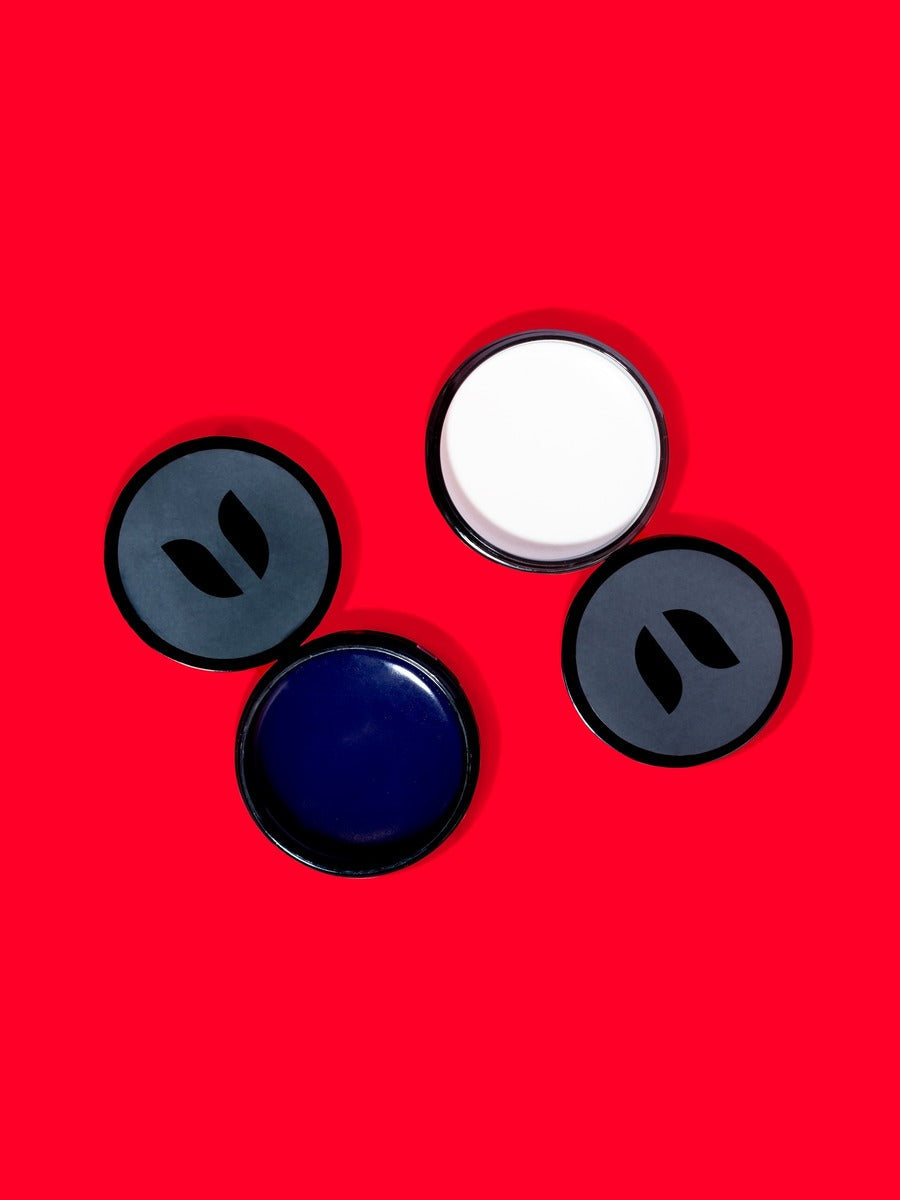
Yes — hair clay is one of the best styling choices for thin or fine hair. Clay minerals like bentonite and kaolin coat each strand with grip and texture, and the matte finish keeps shine from exposing the scalp, so hair looks fuller and denser than it really is. The catch is the amount: fine hair needs about half what thick hair does — too much is the fastest way to make it look greasy and flat.
Key Takeaways
- Clay suits thin and fine hair: mineral grip plus a matte finish make hair look denser — no shine to expose the scalp.
- Start with half a pea-sized amount. Overuse — not the clay — is what makes fine hair look greasy.
- Emulsify fully until the clay disappears, and apply to completely dry hair only.
- Blow-dry for lift first; layer a little powder at the roots under clay for extra volume.
- Avoid heavy waxes, oil-heavy products, and high-shine finishes — they flatten fine strands and expose the scalp.

Why Clay Works on Thin and Fine Hair
Fine strands are smooth and slippery. Left alone, they lie flat, clump together, and leave the scalp visible — which is exactly what makes hair read as thin. Clay changes the surface of each strand: bentonite and kaolin add microscopic grit, so strands grip instead of sliding flat and stand apart instead of bunching up. Hair that stands apart reads as more hair.
The minerals also absorb excess oil — and oil is what turns fine hair into separated strings by midday. The matte finish matters just as much: shine acts like a spotlight, reflecting light off the scalp through thin coverage. Matte removes that glare, so coverage looks more even. One honest limit: clay does not thicken the strand itself and does not grow new hair. It changes how the hair you have presents — and for most men, that is the whole game.
Thin Hair vs. Fine Hair: The Quick Difference
Fine hair means each strand has a small diameter. Thin hair means fewer strands per square inch — lower density. You can have fine hair with plenty of density, coarse hair that is thinning, or both at once — clay helps in every case: grip and finish, not weight. What clay is, and how it compares to pomade and wax: Hair Clay for Men: The Complete Guide.
The Less-Is-More Rule for Fine Hair
Fine hair shows every bit of product: the amount that disappears into thick hair sits on fine hair, separates it, and turns greasy by noon. So the starting dose is half a pea-sized amount — less than feels right. Apply, shape, wait a minute, judge the hold. If it needs more, add a second thin layer the same way. You can always add clay; you cannot remove it without washing and starting over.

How to Apply Hair Clay to Thin Hair: 6 Steps
The general technique is in How to Use Hair Clay. This is the fine-hair version:
- Start with completely dry hair. Not towel-dried — dry. Water dilutes grip and clumps fine strands, and clumped strands look thinner.
- Scoop half a pea-sized amount. Half of what standard advice says — a starting dose, not the final one.
- Emulsify until it disappears. Rub 10 to 20 seconds until no white remains, fingers included. Half-warmed clay grabs in patches — fine hair shows every one.
- Work it in back to front. Rake from the back forward while palms are fully coated, so the crown gets product before your hands run dry.
- Build at the roots and mid-lengths. Push fingers to the scalp, lifting as you go — root lift builds the fuller look. Ends need only what is left on your fingers; heavy product on tips pulls them down.
- Shape, then decide. Finger-style for texture. Wait a minute; add a micro-layer only if the hold genuinely is not there.
Blow-Dry First: Where the Lift Actually Comes From
Clay locks in shape — it cannot create lift on hair dried flat. So blow-dry first: upward, against the direction your hair falls, lifting at the roots with your fingers. Cool shot to set, confirm fully dry, then clay holds what the dryer built.
Powder Under Clay: The Extra-Volume Layer
For maximum lift, layer. Shake a little styling powder at the roots first — the rule is absolute: always start with very little, because too much up front causes trouble. Then work your half-pea of clay through the mid-lengths and ends. Powder lifts, clay locks. Full powder method: How to Use Hair Styling Powder for Men.
5 Mistakes That Make Thin Hair Look Thinner
- Using too much product. Excess clay separates fine strands and turns them greasy. Halve your amount before blaming the product.
- Applying to damp hair. Watered-down clay grips weakly, so strands clump instead of standing apart.
- Skipping the full warm-up. Half-emulsified clay lands in patches — clumps here, bare flat hair there.
- Coating only the top. Surface-only product weighs the top down; roots stay flat. Work it to the roots and lift.
- Stacking on yesterday's buildup. Old product plus fresh clay equals dull, heavy hair — start clean or rinse yesterday's out.
What to Avoid on Fine Hair
- Heavy waxes: thick waxes coat each strand and pull fine hair flat.
- Oil-heavy products: oil-based stylers add shine and separation — the two things that make thin coverage most visible.
- High-shine and wet-look finishes: glossy finishes clump strands into strings and spotlight the scalp.
- Alcohol-heavy sprays used daily: daily use dries fine strands out and makes them brittle.
Frequently Asked Questions
Is hair clay good for thin hair?
Yes. Bentonite and kaolin add grip and texture to each strand, and the matte finish keeps shine from highlighting the scalp — so hair looks fuller and denser. Clay does not grow hair or change the strand itself; it changes how your hair looks. Start with half a pea.
How much hair clay should I use for fine hair?
Start with half a pea-sized amount — less than feels right. Emulsify fully, apply to dry hair, and add a second thin layer only if the hold is not there yet. Too much is what makes thin hair look greasy and weighed down.
Does hair clay make hair look thicker?
It makes hair look fuller and denser: grip separates strands so they stand apart instead of lying flat, and the matte finish reduces scalp shine showing through. It does not thicken the strand itself or grow new hair — presentation, not growth.
Should I put clay in wet or dry hair if my hair is thin?
Dry hair, always. Water dilutes grip and clumps fine strands — making thin hair look even thinner. Blow-drying for lift? Finish drying completely before the clay goes in.
Will hair clay weigh fine hair down?
Not at the right amount — the minerals grip without a heavy coating, so clay is one of the lighter strong-hold options. Weigh-down comes from overuse or heavy wax- and oil-based products.
Is powder or clay better for thin hair?
Different jobs. Powder adds lift and grip at the roots; clay locks texture and hold through the mid-lengths and ends. For maximum volume, layer: a very small amount of powder at the roots first — always start with very little — then clay.
The Right Clay for Thin Hair
DASH FOR HIM Hair Clay is built on bentonite and kaolin — the minerals behind the grip, oil absorption, and matte finish — with beeswax, lanolin, argan oil, and carnauba wax for workability. Made in the USA, featured in GQ, and built to sit with the top clays in the category. The 4 oz jar is $25 — at a half-pea a day, it goes a long way.
Shop now: Hair Clay


Written by CJ Da Barber
Christian "CJ" Gonzalez is an award-winning barber and educator based in Dallas, Texas, and Lead Educator for the D.F.S. Formula in North America. He has earned multiple BTC One Shot Hair Awards and Barbercon's Barber Come Up of the Year award, and he teaches barbering internationally in English and Spanish. CJ is also the barber behind DASH FOR HIM's formulas — he helped develop the hair clay and led R&D on the styling powder as part of the 2019 launch team. Follow him on Instagram: @cjdabarber_